Backpacking Safety for Beginners: Shakedown Trips & The 4 W’s Explained
If you’re new to backpacking—or getting back into it after years away—there are two things that can make or break your experience before you even hit the trail:
- Your shakedown trip
- Your understanding of backcountry safety
Most beginners focus on gear. Some focus on mileage. But the reality is this:
👉 The safest backpackers are the ones who prepare before it matters.
In this guide, we’re going to break down exactly how to do that using a simple approach:
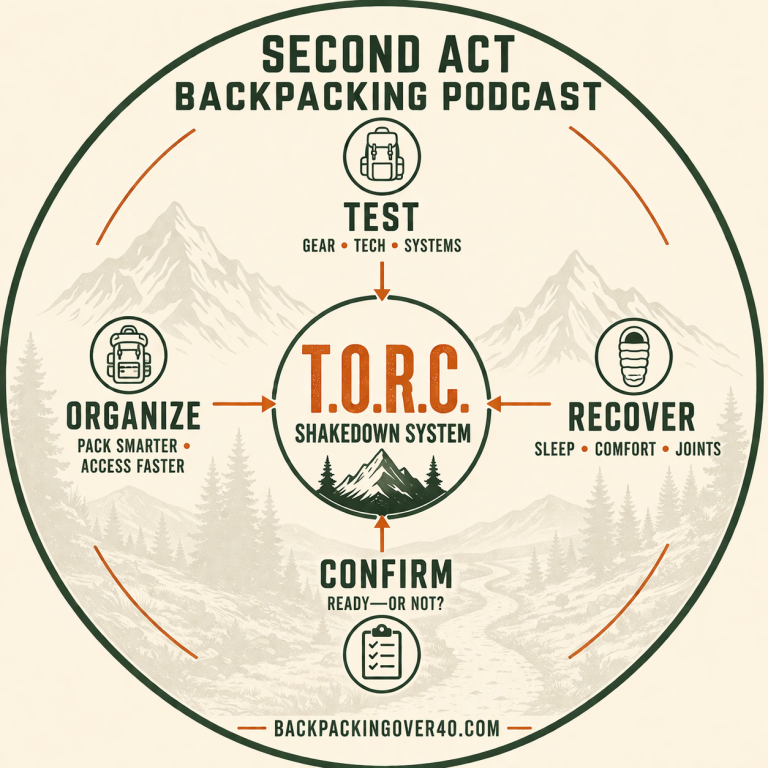
- The purpose of a shakedown trip
- The 4 W’s of backpacking safety
🎧 Prefer to Listen?
This article is based on Episode 3 of The Second Act Backpacking Podcast.
Listen to the full episode here: PODCAST
What Is a Shakedown Trip (And Why It Matters)
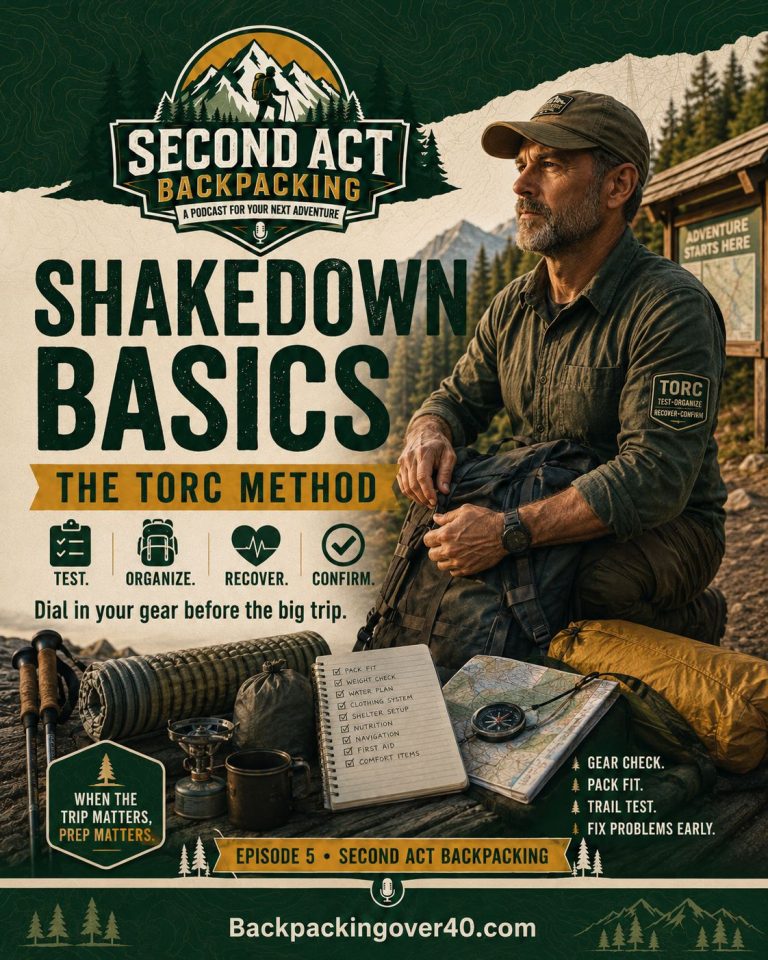
A shakedown trip is a short, low-risk overnight trip designed to test your gear, setup, and overall readiness before a real backpacking trip.
This is not about pushing miles.
This is not about testing your limits.
This is about one thing:
Finding problems before they matter.
What a Good Shakedown Trip Looks Like
- 1–3 miles to camp
- Minimal elevation gain
- Easy access back to your vehicle
- Low-risk environment
The goal is simple:
If something goes wrong, you can get out quickly.
Why You Should Never Skip a Shakedown
Skipping a shakedown trip is one of the most common mistakes beginners make.
Here’s why it matters:
1. Gear Failure Happens
- Sleeping pads leak
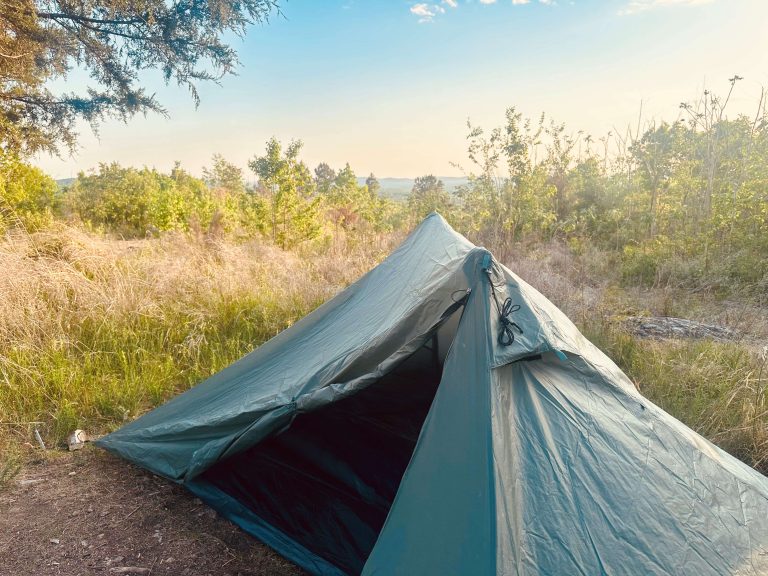
- Tents are missing parts
- Stoves don’t work as expected
It’s better to discover that 1 mile from your car than 10 miles deep in the backcountry.
2. Comfort Matters More Than You Think
You can tolerate a bad setup for one night.
You cannot tolerate it for 3–5 days.
A shakedown helps you answer questions like:
- Can you actually sleep on your pad?
- Is your pack comfortable?
- Does your setup make sense?
3. New Gear Must Be Tested
Any time you change one of your “Big 3,” you need a shakedown:
- Tent
- Sleeping system
- Backpack
If it hasn’t been tested in the field, it’s not ready.
4. Solo Backpackers Need Confidence
If you’re hiking solo, a shakedown is critical.
It helps you:
- Build confidence
- Test safety systems
- Get comfortable being alone in the backcountry
The 4 W’s of Backpacking Safety
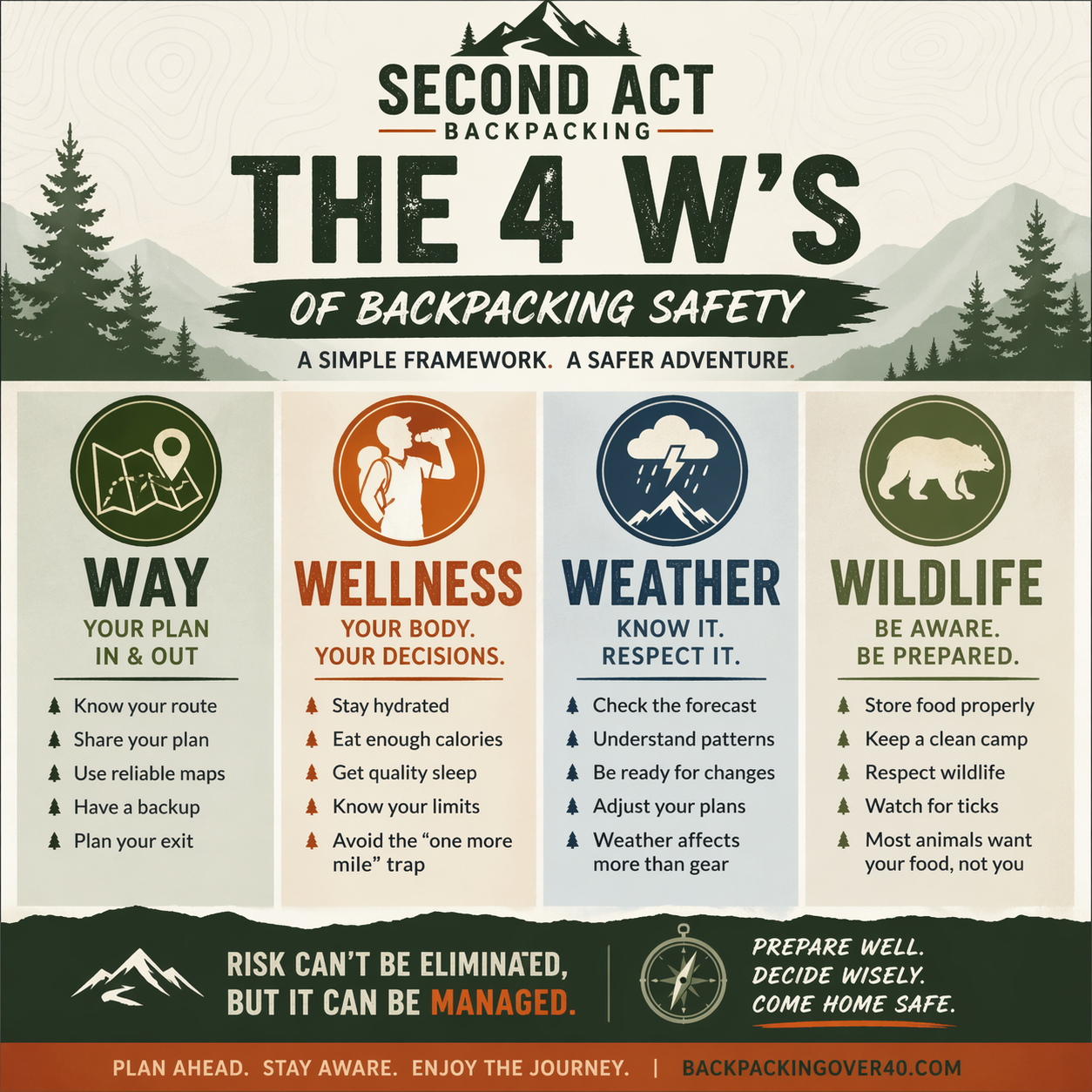
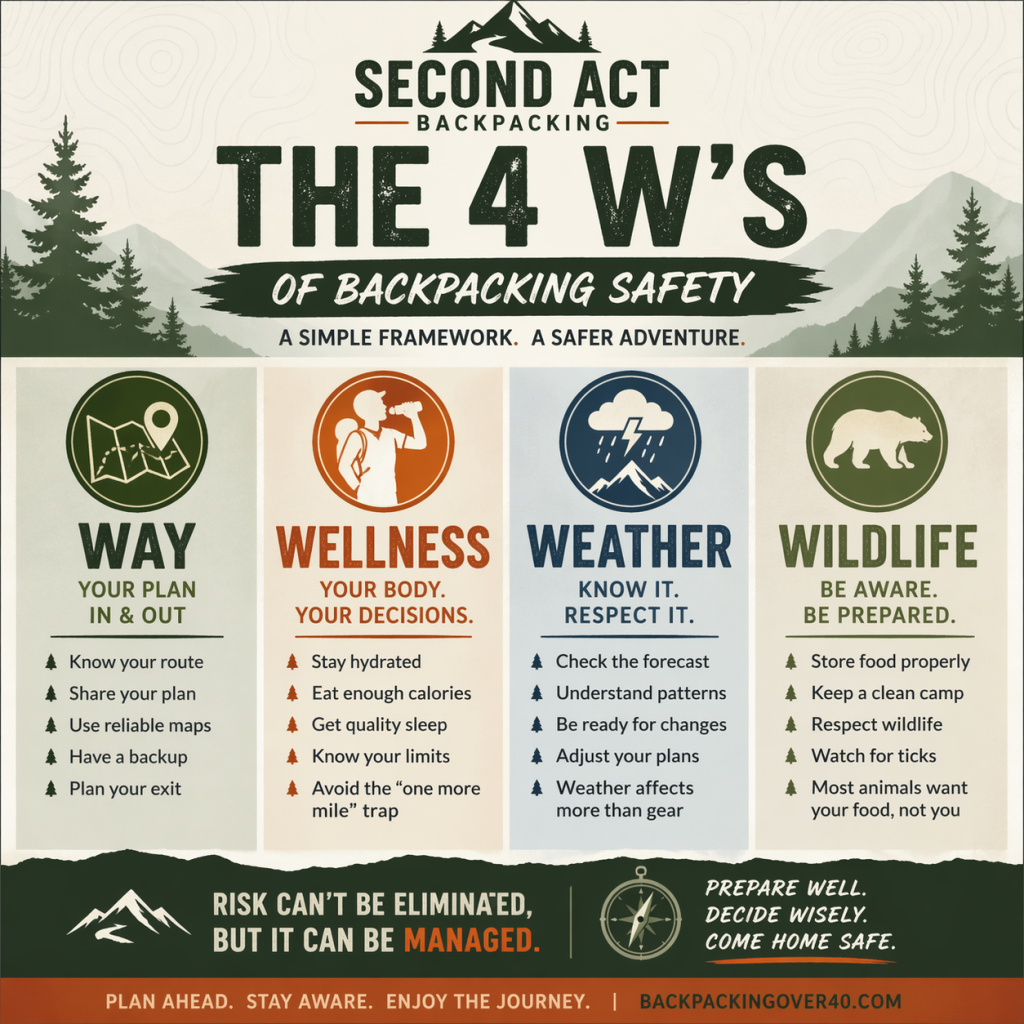
The 4 W’s at a Glance
The 4 W’s of Backpacking Safety
1. Way: Your Plan In and Out
“Way” is about knowing:
- Where you are going
- How you are getting there
- How you are getting out
The Most Important Rule
👉 Someone must know your plan.
At a minimum, share:
- Trail location
- Route details
- Parking location
- Expected return time
- What to do if you don’t check in
This is one of the simplest and most important safety steps you can take.
We have created a one-page filler form you can leave with a friend.
Additionally, we carry the Garmin inReach 2 on all our backcountry trips. We have created a review based on our testing. You can check that out Here.
Don’t Rely Only on Technology
Apps fail. Batteries die.
Always:
- Know key landmarks
- Understand your route
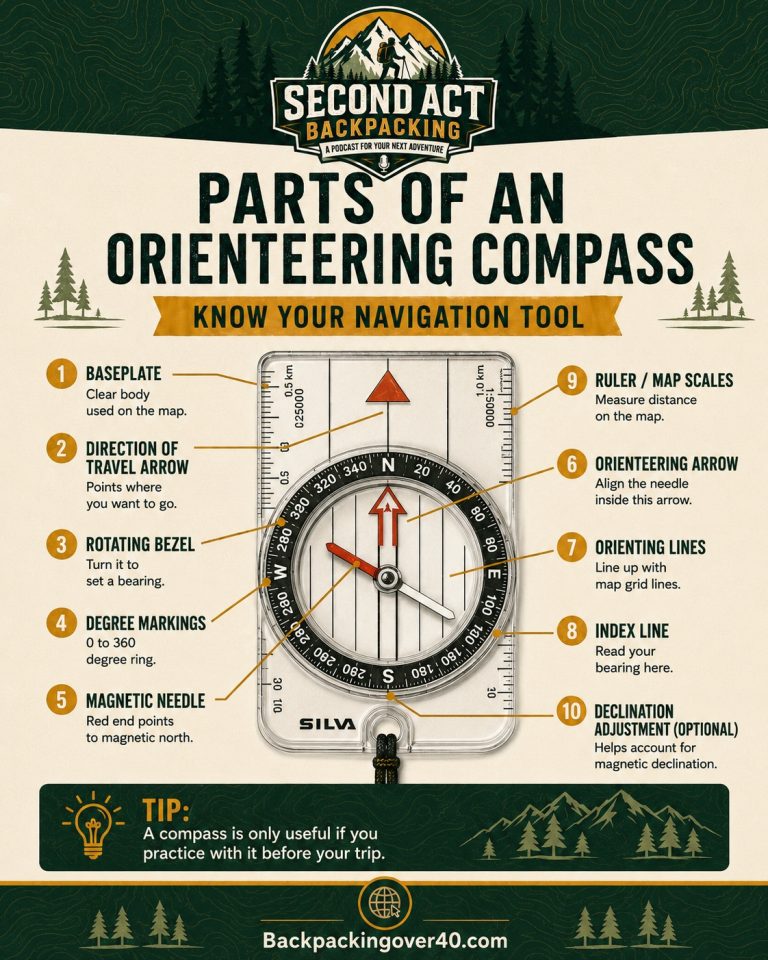
- Carry a basic backup (like a compass)
Plan Your Exit (Before You Need It)
Things don’t always go as planned.
Ask yourself:
- Where can I turn around?
- What if I can’t reach my campsite?
- Are there bailout points?
Having a “way out” is just as important as having a “way in.”
2. Wellness: Your Physical and Mental State
Most backcountry problems don’t start with emergencies.
They start with:
- Fatigue
- Hunger
- Dehydration
These lead to bad decisions.
Focus on the Basics
- Stay hydrated
- Eat enough calories
- Prioritize sleep
If you ignore these, your judgment suffers—and that’s when mistakes happen.
The “One More Mile” Trap
This is one of the biggest mistakes hikers make:
“Let’s just go one more mile…”
That decision can:
- Push you into darkness
- Cause navigation mistakes
- Lead to exhaustion
Small decisions stack up—and that’s how people get into trouble.
3. Weather: More Than Just the Forecast
Checking the weather isn’t enough.
You need to understand:
- How fast conditions can change
- How the weather behaves in your location
- How it impacts your campsite decisions
Weather Affects More Than Gear
It also impacts:
- Where you camp
- When you hike
- Your exposure to risk
Examples:
- Camping near rising water
- Setting up on exposed ridgelines
- Ignoring incoming storms
4. Wildlife: The Most Overestimated Risk
Wildlife is what most beginners worry about.
In reality, it’s one of the least likely dangers—if you use basic common sense.
Most Animals Want Your Food, Not You
Proper food storage solves most problems:
- Bear bags
- Bear canisters
- Proper campsite habits
The Real Risk: Ticks
In many areas (especially the Southeast), the biggest threat is:
Ticks and tick-borne illness
Take simple precautions:
- Use permethrin
- Do tick checks
- Stay aware in tall grass and brush
Risk Isn’t Eliminated—It’s Managed
Backpacking is not risk-free.
But it is manageable.
The difference comes down to:
- Preparation
- Awareness
- Decision-making
When you combine:
- A proper shakedown trip
- A focus on the 4 W’s
You dramatically increase your chances of having a safe and enjoyable experience.
Final Thoughts
You don’t need to be an expert to backpack safely.
You just need to:
- Start small
- Test your setup
- Build experience over time
That’s how confidence is built.
That’s how mistakes are minimized.
And that’s how you set yourself up for a successful “second act” in the outdoors.
One Comment